
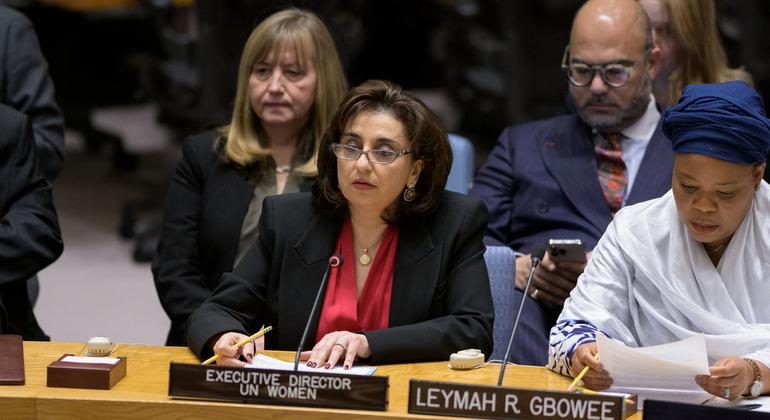

A new report published on October 20 2025 by the United Nations Women and related bodies reveals a troubling reality: despite 25-years of commitments under UN Security Council Resolution 1325 , which called for the full participation of women in peace and security processes , women remain largely excluded from decision-making in global peace negotiations.
The report highlights that women made up only about 7 per cent of negotiators on average worldwide in recent years, and nearly nine out of ten negotiation tracks had no women negotiators at all. Mediators fared slightly better, averaging about 14 per cent representation , still far below parity.
Meanwhile, the humanitarian toll on women continues to escalate. The same report notes that some 676 million women now live within 50 km of active conflict zones , the highest number since the 1990s. Civilian casualties among women and children have quadrupled compared to a couple of years ago, and sexual violence in conflict has surged.
Experts argue that this exclusion of women at the negotiation table carries real consequences. Women often lead recovery efforts, rebuild communities, oversee family welfare and support displaced populations — yet when the formal peace processes leave them out, their knowledge, needs and priorities fail to shape agreements. The result: peace deals that may exclude gender-based reforms, ignore women’s security, or fail to embed inclusive reconstruction plans.
The UN’s own leadership was stark in its warning: “Gains are fragile and — very worryingly — going in reverse.”
The organisation urged governments, mediators and international agencies to adopt binding quotas for women’s participation, guarantee funding for women’s organisations in conflict-affected areas, hold peace negotiations in settings that allow for women’s involvement and ensure accountability for gender-based violence in post-conflict contexts.
Analysts underline that the cost of exclusion is not just ethical , it is strategic. Evidence suggests peace deals with meaningful women’s participation are more durable: they are likelier to address social factors, include provisions for inclusion and rebuild in ways that heal rather than simply stop conflict. Yet, as the report reveals, the world is far from realising that vision. The challenge now: translate decades of rhetoric into measurable action before another generation of women pay the price of silence.