
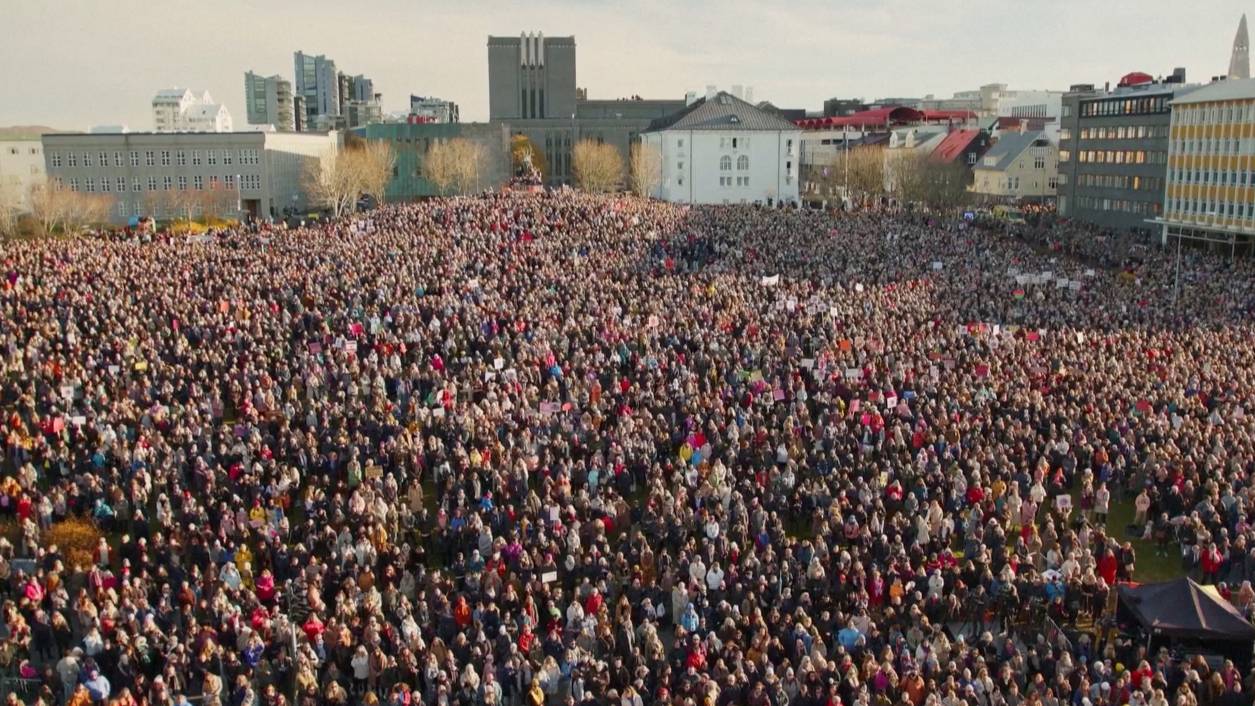

Fifty years ago, on October 24, 1975, Iceland witnessed a defining moment in its struggle for gender equality: the “Women’s Day Off” (Kvennafrí). On that day, an estimated 90 percent of Icelandic women walked away from their paid jobs, refused to do domestic work, and took to the streets to demand recognition, respect, and rights. What followed changed the country forever.
Women rallied in cities across Iceland. Schools, offices, shops, and factories came to a standstill. Without women in their usual roles, the daily rhythm of society faltered , and it is precisely this disruption that made the strike so powerful. The message was simple but profound: women’s labor, both paid and unpaid, is indispensable.
The protest sparked immediate political and social change. Within a year, Iceland passed a law ensuring equal rights for men and women. In the years that followed, more women entered politics, culminating in 1980 with the election of Vigdís Finnbogadóttir, the world’s first democratically elected female president. Iceland’s leadership world began to reflect the very community it served.
Over time, the country shifted dramatically. Policies on childcare, parental leave, and workplace equality followed. Iceland became a global example of gender progress, working harder than many to close the gender pay gap and elevate women’s participation in all spheres of life. Today, Iceland frequently tops global rankings for gender parity, and many of its institutions are led by women.
Still, the strike’s 50th anniversary has been marked by a recognition: the work isn’t done. Leaders and activists point out that despite decades of progress, issues remain. Women continue to face gender-based violence, and the burden of unpaid labor still disproportionately falls on them. There is also concern about backlash , not just in Iceland, but around the world , against the very equality the strike once championed.
On the anniversary, Iceland organized public events, rallies, and reflections on how far it has come and how far it still has to go. The spirit of 1975 lives on as a reminder: real societal change takes courage, collective action, and sustained commitment.
The legacy of the Women’s Day Off is not just in the reforms it triggered, but in its enduring inspiration. Feminist movements across the globe still look to that day as proof that when women stand together, the world listens.